
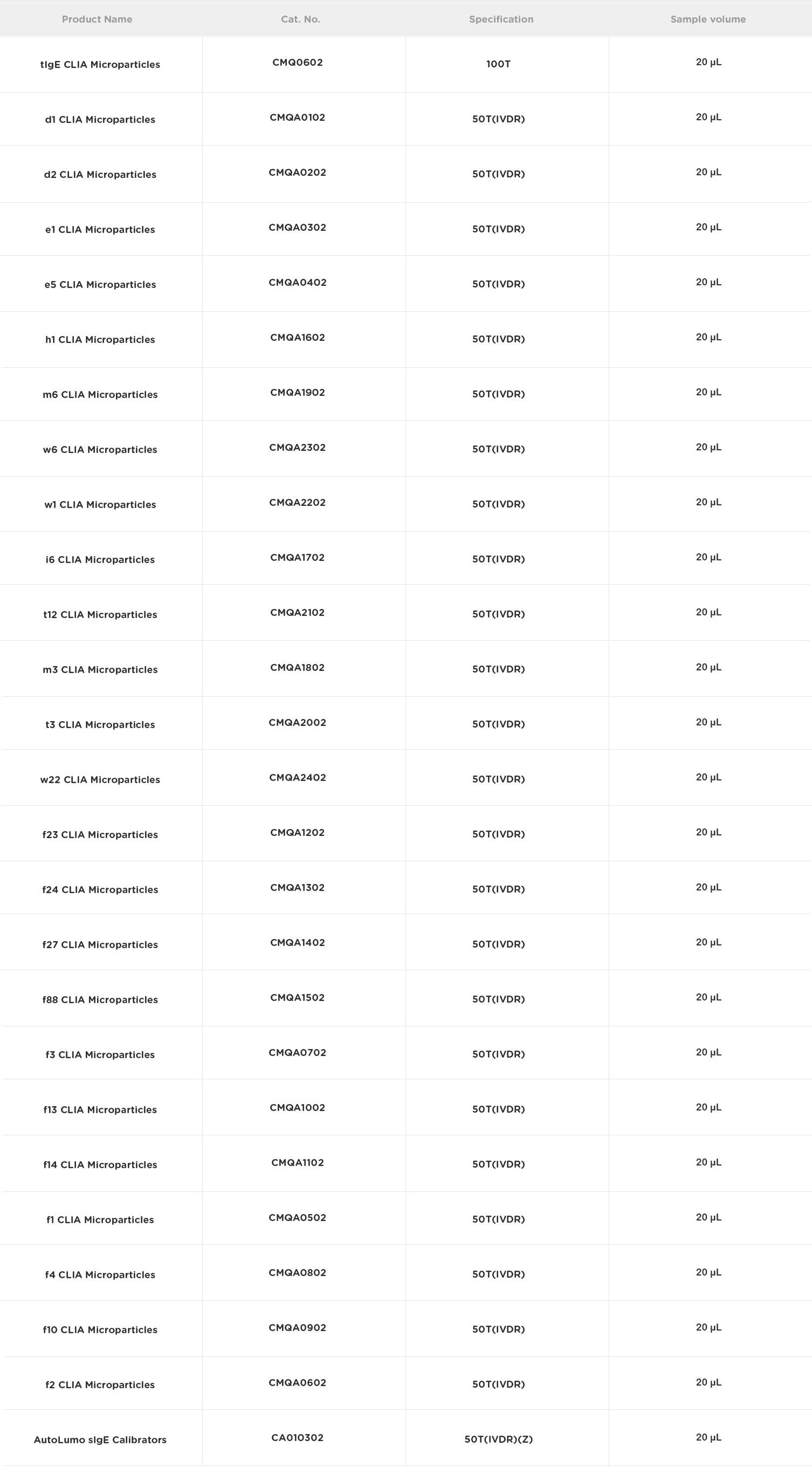
Allergic reactions, also known as type I allergic reactions, are specific immune responses caused by tissue damage or physiological dysfunction in the body after being stimulated by the same antigen. The White Paper of the World Allergy Organization estimates that the prevalence of allergic diseases worldwide is 10% to 40%[1]. Common allergic diseases include allergic rhinitis, allergic asthma, atopic dermatitis, urticaria, food allergies, and eczema. In severe cases, allergic shock may occur. The symptoms of allergic reactions induced by different allergens vary, and their clinical symptoms are related to the patient's age, genetic factors, and exposure to allergens. Therefore, quantitative detection of allergen specific IgE is very important [2-4].
[1] Pawankar R , Canonica G , Holgate S . World Allergy Organization (WAO) white book on allergy, Update. 2013.
[2] Yunginger JW, Ahlstedt S, Eggleston PA, Homburger HA, Nelson HS, Ownby DR, Platts-Mills TA, Sampson HA, Sicherer SH, Weinstein AM, Williams PB, Wood RA, Zeiger RS. Quantitative IgE antibody assays in allergic diseases. J Allergy Clin Immunol. 2000 Jun;105(6 Pt 1):1077-84.
[3] Ahlstedt S. Understanding the usefulness of specific IgE blood tests in allergy. Clin Exp Allergy. 2002 Jan;32(1):11-6.
[4] Gould HJ, Sutton BJ. IgE in allergy and asthma today. Nat Rev Immunol. 2008 Mar;8(3):205-17.


Address: NO.87 Jingbei Yi Rd, National Eco&Tech Zone, Zhengzhou, China
Email: info@autobio-diagnostics.com Tel: +86-371-6200-7036
Autobio Copyright Reserved for ICP 18006568. All Rights Reserved.
 Select Market or Language