
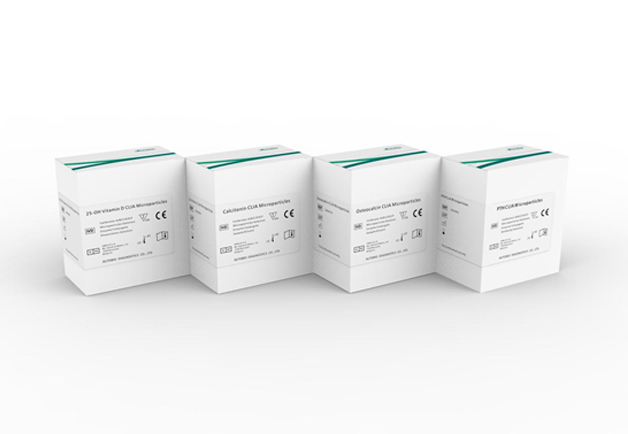
Bones are a type of tissue that undergoes very active metabolism. They can produce multiple metabolic products during molecule synthesis and degradation, and are regulated by multiple hormones. Clinically, assessing bone metabolism-related markers in the blood and urine can help evaluate the status of bone metabolism. Markers of bone metabolism include regular biochemical markers like phosphorus, calcium and potassium in blood, and regulatory hormones of bone metabolism like 25-hydroxy vitamin D (25OH-VD) and its metabolites, parathyroid hormone (PTH), calcitonin (CT) and also bone turnover markers like osteocalcin (OST).
β-CTX (β-CrossLaps) and P1NP (Procollagen Type Ⅰ N-Terminal Propeptide) are clinically common bone turnover markers, which reflect the dynamic changes of bone resorption and bone formation respectively. The combined detection of the two markers can comprehensively evaluate the bone turnover status, providing an important basis for the diagnosis and treatment monitoring of skeletal diseases.
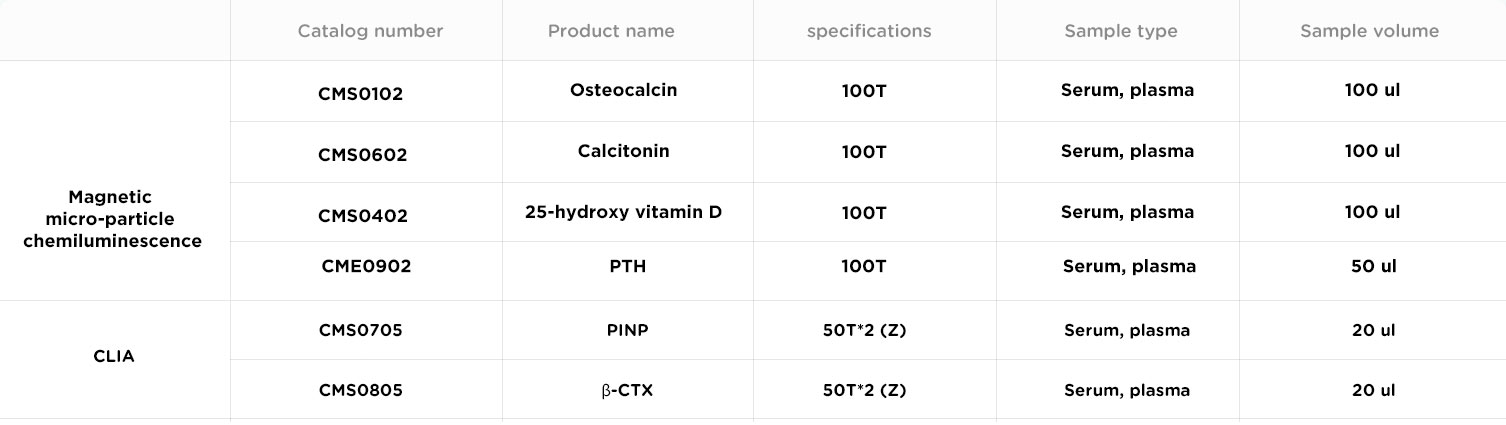
* Product specifications and parameters are subject to the Instruction for Use.
OST is a bone-specific protein whose level reflects the activity of osteoblasts. Based on the variation of OST level, one can distinguish the type of osteoporosis to be either high-turnover or low-turnover.OST level can also be used to monitor the therapeutic effects of bone resorption inhibitors and bone growth stimulators.
Calcitonin (CT) is secreted by thyroid parafollicular cells (or named C cells), which has the primary function of reinforcing osteogenesis. Oestrogen can up-regulate the secretion of CT. Reduction of CT level could be a primary cause of the onset of postmenopausal osteoporosis. CT is an ultra-sensitive tumor marker in diagnosing medullary thyroid cancer (MTC). It can be used in the early preoperative diagnosis, postoperative follow-up and also treatment effectiveness evaluation of MTC.
25OH-VD is a steroid that supports the mineralization of osteoid and some other vitamins, hormones and minerals.It plays an important role in the formation and maintenance of strong bones. Serum 25OH-VD level is currently the well-acknowledged golden standard for evaluating VD nutritional status. Based on the gross amount 25OH-VD in the serum, one can determine the VD nutritional status of a human body. Vitamin D is also related to immune regulation, cardiovascular diseases, hypertension, diabetes, chronic renal diseases, auto-immune diseases, inflammation and common tumors.
Parathyroid hormone (PTH), para-thormone or parathyrin, is secreted by the chief cells of the parathyroid glands as a polypeptide containing 84 amino acids. PTH controls the level of calcium in the blood, which is a mineral that keeps your bones and teeth healthy and strong. PTH also plays an important role in controlling the levels of phosphorus and vitamin D in the blood.
β-CTX is a specific fragment released during the degradation of type Ⅰ collagen and serves as a bone resorption marker. Its serum concentration directly reflects the activity of osteoclasts and the rate of bone resorption.
P1NP is a fragment cleaved from the amino-terminal of type Ⅰ procollagen during synthesis and acts as a bone formation marker. Its serum concentration reflects the activity of osteoblasts and the rate of bone formation. Unlike other bone formation markers, it is not affected by circadian rhythm and has good stability.
[1]Decai Chen, Eryuan Liao, Ling Xu, Zhenlin Zhang, A guide for the clinical applications of bone metabolism biochemical markers [J], Chinese Journal of Osteoporosis and Bone Mineral Research, 2015,8(04):283-293.


Address: NO.87 Jingbei Yi Rd, National Eco&Tech Zone, Zhengzhou, China
Email: info@autobio-diagnostics.com Tel: +86-371-6200-7036
Autobio Copyright Reserved for ICP 18006568. All Rights Reserved.
 Select Market or Language