


In April 2018, Autobio's Automated Microbial Mass Spectrometry Detection System (Autof ms1000) obtained official registration approval from the National Medical Products Administration (NMPA), emerging as the first domestically developed microbial mass spectrometer to gain NMPA clearance in China. In 2024, Autobio launched its next-generation Automated Mass Spectrometry Microbial Identification System — the Autof T Series. Powered by pioneering proprietary technologies and built with an ultra-compact structural design, the system ranks among the world’s most compact fully-automated MALDI-TOF microbial mass spectrometry systems.
Independent Innovation in Core Hardware Technologies
Since its founding, Autobio has sustained long-term R&D investment in microbial diagnostics, adhering to the development strategy of“Immunoassay + Microbiology” and “Reagents + Instruments”. Through nearly three decades of iterative technological upgrading, we have built full-stack technical and industrial capabilities covering blood culture, microbial identification (ID), and antimicrobial susceptibility testing (AST).
Focusing on microbial mass spectrometry identification, we have achieved a series of landmark technological breakthroughs through independent research and innovation.
First, proprietary laser system with independent intellectual property rights. The analytical performance and detection stability of MALDI-TOF microbial identification systems are largely determined by laser excitation efficiency and consistency. Our in-house R&D team developed a customized exclusive laser system, extending the laser service life to billions of shots. This core upgrade ensures stable laser excitation throughout long-term operation, delivers consistent detection results, and substantially improves the overall operational reliability of the mass spectrometry system.
Second, self-developed high-speed data acquisition technology. Mass spectrometry analysis requires ultra-fast, high-resolution signal capture and processing, which imposes stringent requirements on data acquisition modules. To realize high-precision conversion of ion signals into analyzable digital data, our team independently developed a 12-bit high-speed data acquisition card, greatly enhancing the accuracy and integrity of ion signal collection. This breakthrough makes Autobio the first domestic manufacturer in China to equip microbial mass spectrometers with a 12-bit high-speed data acquisition system, effectively boosting the accuracy and reproducibility of microbial identification results.
Third, optimized optical beam-shaping system and upgraded flight tube materials. We developed an innovative optical beam-shaping solution to homogenize laser energy distribution, significantly improving sample ionization efficiency, optimizing spectral peak quality, and enabling more precise microbial identification. In addition, we upgraded the flight tube material from conventional stainless steel to titanium alloy. This optimization effectively reduces ion flight interference, minimizes background noise, and further enhances system detection accuracy.
Fourth, iterative upgrading of self-built microbial fingerprint database. Autobio has established one of the most comprehensive and authoritative microbial protein fingerprint databases globally. The database has expanded from more than 3,800 microbial species in 2018 to over 5,400 species to date, with filamentous fungi species growing from 300 to more than 660. Our MALDI-TOF database covers a wide spectrum of microbial resources, including characteristic filamentous fungi and marine microorganisms, and undergoes continuous real-time updates to support more accurate, comprehensive, and reliable microbial identification.
Continuous independent innovation in core technologies has comprehensively strengthened the performance, stability and reliability of Autobio’s microbial mass spectrometry identification systems.
From Product Innovation to Global Market Recognition
Since commercialization, Autobio’s microbial mass spectrometry identification systems have been widely recognized globally for their fast identification speed, stable and reliable performance, and intuitive, user-friendly operation.
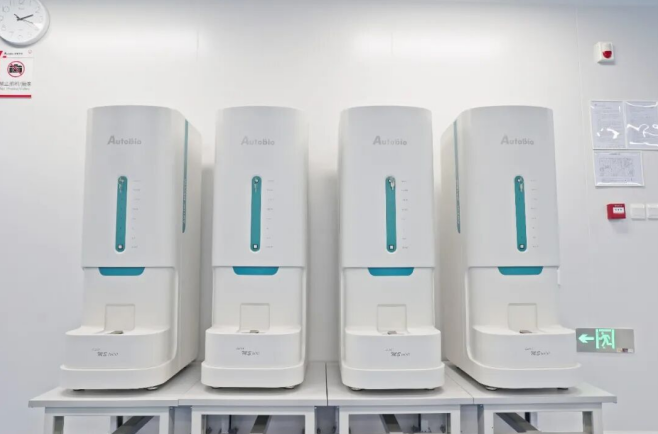
To cater to the diversified and personalized testing needs of clinical and scientific laboratories worldwide, Autobio has continuously enriched and improved its product portfolio. The Autof ms product line has evolved from the original Autof ms1000 into a full-spectrum product family, including multiple mature models: Autof ms600, Autof ms1600, Autof ms2000, and Autof ms2600. To date, the cumulative production volume of the Autof ms Series has exceeded 1,500 systems.
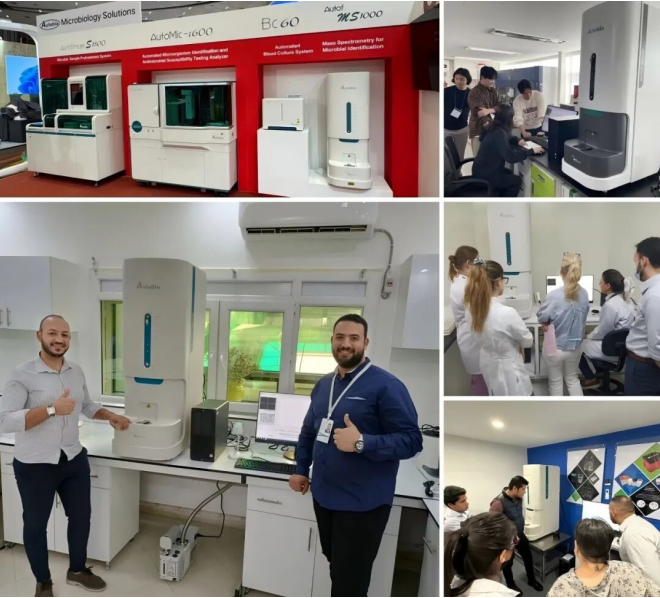
Our technological innovations and product strengths have also driven steady global expansion. In December 2018, the Autof ms1000 obtained regulatory registration approval in South Korea, marking a crucial milestone in Autobio’s global layout. In March 2019, the system was officially exported to South Korea, kicking off our overseas market penetration.
Currently, Autobio’s microbial mass spectrometry identification systems have achieved over 300 international installations, serving clinical and research laboratories across Asia, Europe, North America, South America and other regions worldwide.
Autof T Series: Redefining Intelligent Microbial Mass Spectrometry
Launched in 2024, the Autof T Series is Autobio’s new-generation intelligent microbial mass spectrometry identification system, tailor-made for modern smart laboratory scenarios.
Equipped with core innovative technologies including AIEF and TAA, the system maintains industry-leading high sensitivity and high resolution while realizing a significant reduction in ion flight distance.
The Autof T Series features a revolutionary ultra-compact design. Through overall structural optimization and modular integration, the instrument achieves approximately 70% volume reduction and nearly 50% weight reduction compared with traditional models, effectively solving laboratory space constraints and greatly improving operational and layout flexibility.
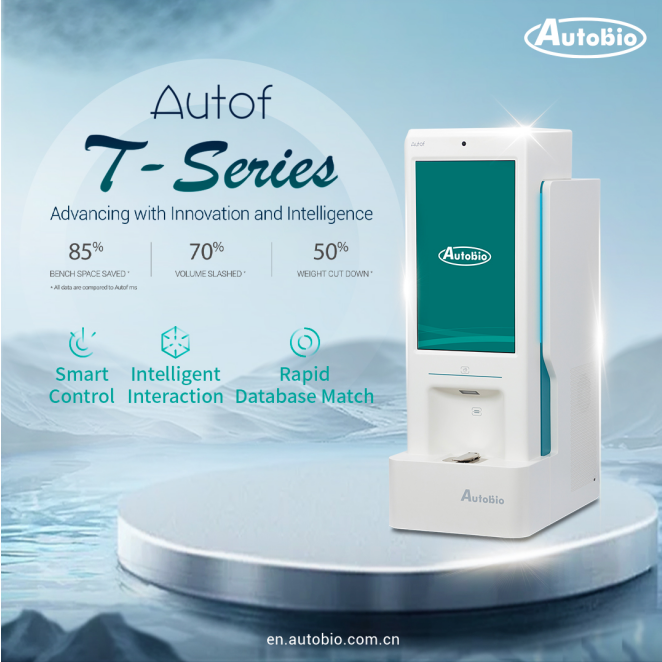
The system is equipped with a 18.5-inch full-touch screen, delivering a more intuitive, efficient and humanized operating experience. Supported by an intelligent operating system and full process quality control mechanisms, the Autof T Series brings a new standard of convenience, accuracy and reliability to microbial identification workflows.
As of March 2026, the total domestic installed base of Autobio’s microbial mass spectrometry systems (including the Autof T Series and ms Series) has exceeded 1,300 units, reflecting strong market recognition and high customer trust in China.
Autobio’s Integrated Full-Process Microbial Diagnostic Solutions
For Autobio, microbial identification is not a standalone product, but a core link in our full-coverage microbial diagnostic solution ecosystem.
By integrating high-performance instruments, matched diagnostic reagents, automated workflow systems and intelligent information management technologies, we have built a closed-loop full-process microbial diagnostic workflow, covering everything from pre-analytical sample pretreatment to final clinical result reporting.
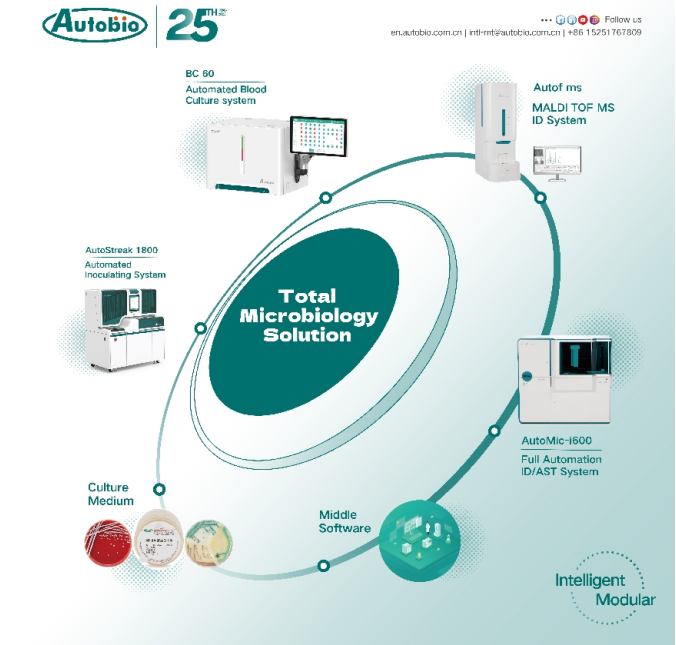
Autobio’s comprehensive microbial diagnostic product portfolio includes:
• AutoStreak S1800 Microbial Sample Processing System: Standardizes sample pretreatment workflows and significantly improves laboratory processing efficiency;
• BC60 & BC120 Plus Blood Culture System: Supports fully-automated, high-efficiency microbial blood culture testing;
• AutoMic-i600 Automatic ID/AST System: Enables full-process automation from sample loading, constant-temperature incubation to automatic result interpretation for microbial identification and antimicrobial susceptibility testing;
• Mylab Microbiology Laboratory Management System: Realizes intelligent data interconnection and unified management throughout sample inoculation, blood culture testing, microbial identification and AST procedures.
Covering the entire microbial diagnostic chain from sample pretreatment, microbial identification and antimicrobial susceptibility testing to intelligent laboratory informatization management, we continue to drive full-scenario technological innovation in microbial diagnostics. With advanced core technologies, intelligent equipment systems and integrated overall solutions, Autobio remains committed to empowering global laboratories with faster, smarter and more reliable microbial diagnostic capabilities.
Moving forward, Autobio will continue to increase R&D investment in microbial diagnostic innovation, accelerate the industrialization of advanced medical technologies, and deepen cooperation with global partners to jointly promote the high-quality development of the global microbial diagnostics industry.


Address: NO.87 Jingbei Yi Rd, National Eco&Tech Zone, Zhengzhou, China
Email: info@autobio-diagnostics.com Tel: +86-371-6200-7036
Autobio Copyright Reserved for ICP 18006568. All Rights Reserved.
 Select Market or Language


