


In 2013, Autobio launched AutoLumo A2000 Fully Automated Chemiluminescence Immunoassay Analyzer, becoming the first innovator in China to possess a CLIA Microparticle platform capable of random single-sample testing at a throughput of 200 tests per hour. This breakthrough not only broke the monopoly of international giants, but also filled a technological gap in China, establishing a new benchmark for China's immunoassay industry.
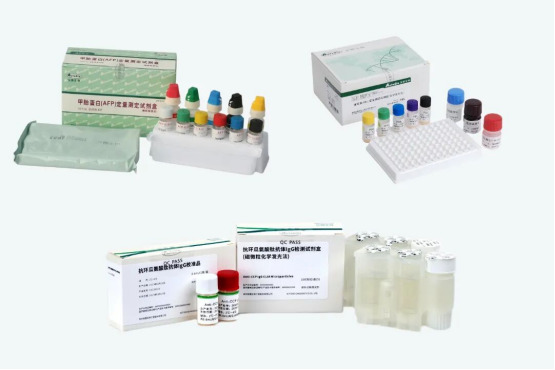
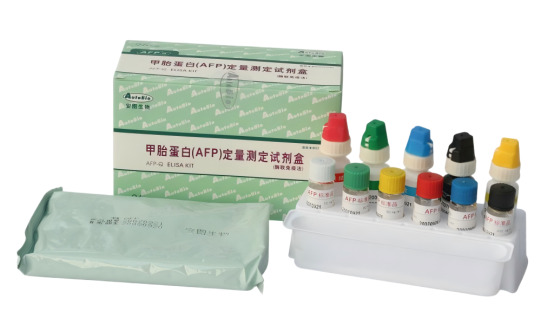
Autobio is one of the few companies in China that has experienced three major technological iterations: enzyme-linked immunosorbent assay (ELISA), microplate-based chemiluminescence immunoassay (CLIA), and chemiluminescent microparticle immunoassay (CLIA Microparticle). Founded in 1998, Autobio initially focused on the manufacturing and sales of ELISA products, such as Anti-HCV ELISA kit and AFP ELISA kit.
During the AACC 1999 exhibition in the United States, Chairman Miao Yongjun and his team identified chemiluminescence technology as the mainstream trend in the future. This insight prompted the launch of chemiluminescence product R&D, marking a shift from ELISA to the microplate-based CLIA.
During the development of microplate-based CLIA, Autobio prioritized the creation of chemiluminescent substrates. Through years of R&D, the chemiluminescent substrate now meets advanced international benchmarks for initiation speed and luminescence stability. Autobio subsequently launched the first quantitative TSH CLIA kit, which set the stage for the rollout of its microplate-based CLIA products. At that time, Autobio microplate-based CLIA products, primarily targeting infectious diseases, were highly popular nationwide in China.
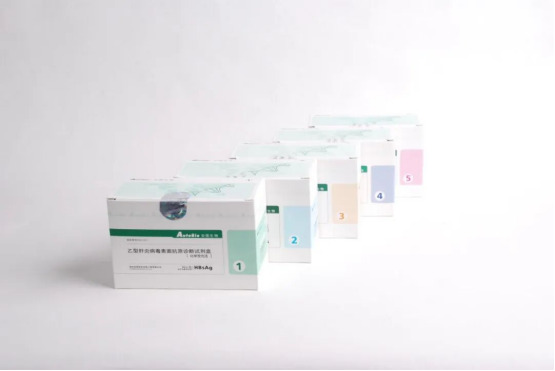
However, internationally, microplate-based CLIA were merely transitional. The truly leading technology involved coating antigens and antibodies on superparamagnetic microparticles, i.e., the CLIA Microparticle. This approach ensures more uniform reactions, significantly improves reaction efficiency, and shortens the reaction time. By 2005, with mastery over microparticle carrier technology, antigen-antibody pairing, and the application of horseradish peroxidase-catalyzed luminol luminescence technology, Autobio began advancing into the field of CLIA Microparticle.
During the independent development of CLIA Microparticle reagents, Autobio emphasized the R&D of fundamental raw materials. Determined to forge its own path, the company developed a series of antigens and antibodies in-house and established Immuno Biotech in 2007.
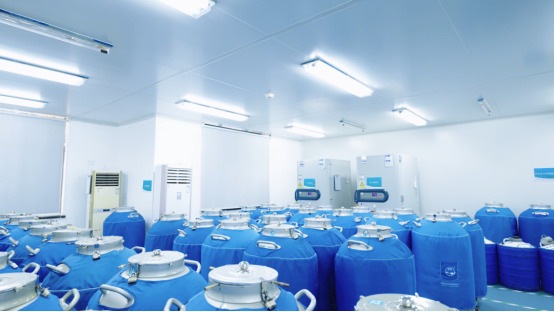
Currently, the company employs over 200 R&D personnel and has created a diagnostic antibody library with more than 100,000 antigen epitopes, which forms a domestic-leading natural antibody library with a capacity exceeding 1013. The self-sufficiency rate of antigens and antibodies for immunoassay reagents is high and internationally leading, ensuring stable and secure product supply.

Instrument Design Concept Draft
Developing a CLIA Microparticle platform requires a "two-pronged" approach: high-quality reagents and fully compatible automated analyzers to ensure accurate and reliable results. In 2008, Autobio began exploring automated instrument R&D.
At that time, the R&D team lacked experience in large-scale fully automated instrument development and thus sought external collaboration to accelerate progress. The team began by comprehensive survey of all domestic companies capable of producing automated instruments. Finding none met the collaboration requirements, they turned to international partnerships. Between 2008 and 2010, the R&D team spent two years interacting with 18 international companies, carrying out site visits and negotiations across the United States, Austria, Switzerland, Italy, Japan, and beyond to seek collaboration opportunities.
Having overcome immense challenges, the company reached a milestone. On May 19, 2010, Autobio signed a formal cooperation agreement with a Japanese company, laying a solid foundation for subsequent technology transfer and independent R&D.
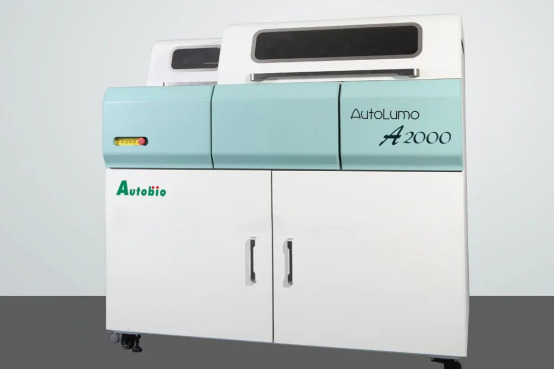
In the process of instrument R&D and manufacturing, the team pursued rigorous performance standards. For instance, to maintain a carryover contamination rate of ≤0.1 ppm (equivalent to 0.1 grams of impurity per ton of water), Autobio repeatedly optimized fluidics and washing protocols through extensive experimentation, analyzed and adjusted every potential influencing factor. To resolve cuvette jamming issues, four engineers worked in two shifts, observing continuously over 24 hours, meticulously recording the time, cause, and details of each failure. Through persistent troubleshooting, they identified improvements and ultimately resolved the problem.
During the transition to the A2000, the R&D team conducted in-depth studies of circuit board structures and principles, analyzed and optimized each circuit line. By the development of the next-generation A2000Plus, all designs were fully independent, with comprehensive upgrades in optical, mechanical, electronic, and software systems, resulting in significantly enhanced performance and stability. In the end, the A2000's failure rate dropped from 4 times a month to just 0.08, making it nearly flawless all year long and matching international excellence.
From the inception of R&D in 2005 to the platform's market launch in 2013, after eight years of relentless effort, Autobio introduced its CLIA Microparticle platform, becoming China's first innovator to possess a CLIA Microparticle platform capable of random single-sample testing at a throughput of 200 tests per hour. This breakthrough shattered the monopoly held by international giants in the field, filled a domestic technological gap, and set a new benchmark for the industry.
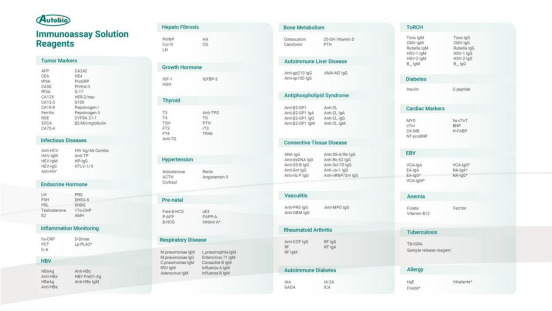
Building on this platform, the Autobio team developed 177 assays across 20 major categories, including infectious diseases, tumor markers, thyroid function, sex hormones, TORCH, hypertension, diabetes, cardiac markers, respiratory disease, autoimmune diseases, and allergens. In the future, Autobio's testing portfolio of CLIA Microparticle is expected to expand to 380 assays.
Building on the AutoLumo A2000, Autobio subsequently launched a series of Fully Automated Chemiluminescence Immunoassay Analyzers, including the AutoLumo A2000Plus, AutoLumo A1860, AutoLumo A6200, and AutoLumo S900, covering a wide range of testing scenarios—from primary clinics to large hospitals—capable of meeting the diverse needs of various healthcare institutions.
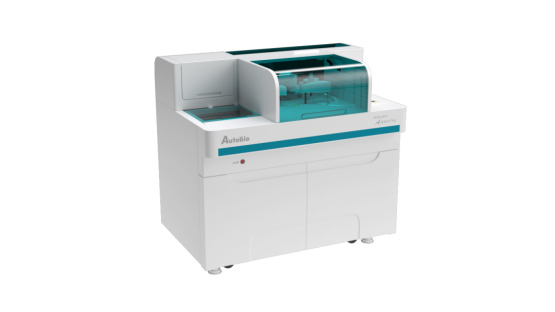
The CLIA Microparticle system has received broad recognition: it has been included in the Ministry of Science and Technology international cooperation projects, 863 Program projects, and four-ministry industrial chain projects; it won the First Prize of the Henan Provincial Science and Technology Progress Award; in the "2024 High-End Medical Equipment Promotion and Application Project" evaluation, the AutoLumo A6200 claimed first place among fully automated chemiluminescence immunoassay systems, thanks to its remarkable technological advancements and wide-ranging applicability.
For nearly thirty years, Autobio has honed its capabilities in active materials, process frameworks, and stable production, creating a collaborative "instrument + reagent" ecosystem. This journey toward brilliance represents both a record of technological innovation and a snapshot of China's IVD industry rising on its own.
In the future, Autobio will press on with unwavering focus, advance in the IVD arena to provide medical labs with top-tier products and services, and contribute more significantly to China's health and medical progress.


Address: NO.87 Jingbei Yi Rd, National Eco&Tech Zone, Zhengzhou, China
Email: info@autobio-diagnostics.com Tel: +86-371-6200-7036
Autobio Copyright Reserved for ICP 18006568. All Rights Reserved.
 Select Market or Language


