


After more than two decades of relentless effort and innovative perseverance, Autobio' work in raw materials holds a leading position among global manufacturers of IVD reagents. The company has established seven major biotechnology platforms, developed twelve core technologies, and built a "one-stop" closed-loop biomaterials development platform. It leads by a significant margin in the supply of core raw materials such as antigens, antibodies, enzymes, and fluorescently modified dNTPs, greatly enhancing the stability and accuracy of diagnostic products and solidifying the company's core competitive advantage. Focusing on foundational sequencing reagents, through structure-activity relationship design, the company has built a library of over a hundred materials in areas like sequencing enzymes, corresponding fluorescently modified compounds and polymer materials, addressing the "bottleneck" issue of key raw materials for core sequencing technologies.
"We must always keep the rice bowl firmly in our own hands." This is true for the "rice bowl" of grain, the "rice bowl" of energy, and equally true for the "rice bowl" of IVD. For diagnostic reagents, core raw materials are crucial; the stability and reliability directly determine the clinical accuracy of the final results.
The most common core raw materials in diagnostic reagents can be categorized by application area: antigens and antibodies, enzymes and substrates, fluorescently modified dNTPs, oligonucleotide primers and probes, and chemical polymer macromolecules, among others. Only by mastering core raw materials can an IVD enterprise firmly grasp the "lifeline" of its own development; otherwise, it may face the risk of being "strangled" at any time. Autobio has a profound understanding of this.
From its inception, Autobio recognized the importance of core raw materials like antigens and antibodies for the research, development, and quality enhancement of IVD reagents, initiating preliminary research and technology reserve work. In 2005, it collaborated with Zhengzhou University School of Medicine to establish a classic mouse hybridoma monoclonal antibody development platform; in 2007, it partnered with Peking University to establish an E. coli recombinant protein expression platform. Also in 2007, to consolidate core raw material R&D capabilities and ensure a stable supply, it wholly established Zhengzhou Immuno Biotechnology Co., Ltd.
Tumor markers have long been one of Autobio's key product series. During the R&D initiation phase for some carbohydrate antigen products, the required monoclonal antibody raw materials were monopolized by several international companies. Autobio's R&D efforts encountered a "stranglehold," which prompted the company to intensify R&D on its monoclonal antibody technology platform, concentrating resources to overcome key technical bottlenecks. This ultimately led to achieving self-sufficiency in these critical raw materials, breaking the technology monopoly.
In 2022, to further enhance independent R&D capabilities for core raw materials in molecular diagnostics and sequencing applications, Materiais Biotechnology Co., Ltd. was established, focusing on technological breakthroughs in key areas such as diagnostic enzymes, non-natural modified nucleotides, high-performance fluorescent compounds, and polymer surface modification materials.
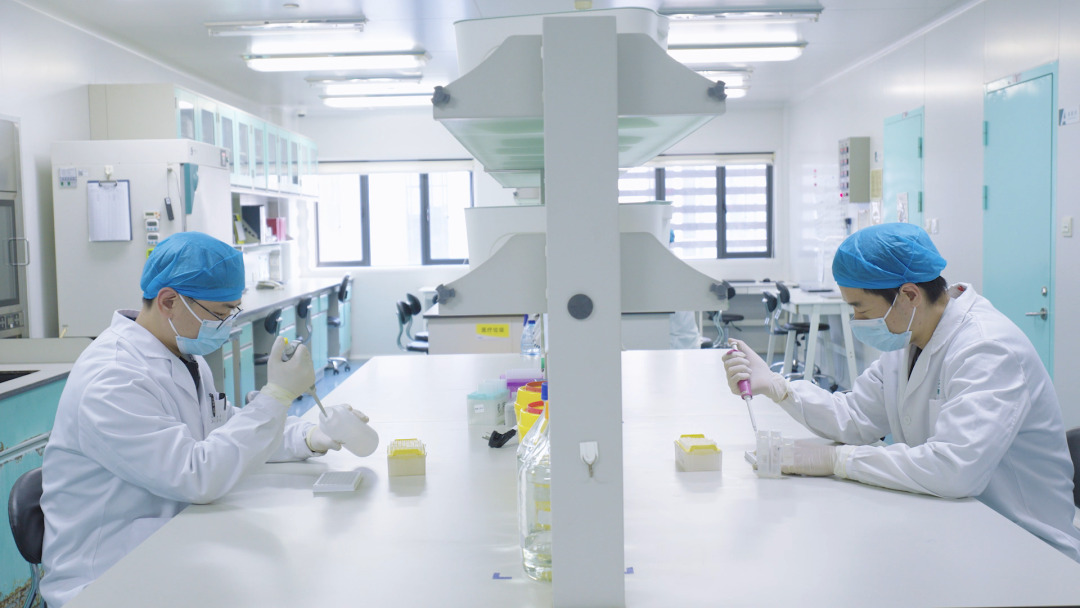
After more than 20 years of relentless effort and innovative perseverance, Autobio has now established seven major biotechnology platforms covering antibodies, antigens, enzymes, oligonucleotides, fluorescent compounds, polymer materials, and functional microspheres. It possesses twelve core technologies including molecular design, chemical synthesis, phage display, stable cell line generation, gene sequencing, bio-fermentation, virus culture, separation and purification, protein modification, bioconjugation, surface modification, and bioanalysis, having constructed a comprehensive "one-stop" closed-loop biomaterials development platform.
Leveraging its comprehensive technological layout and advanced innovation capabilities, Autobio has broken through numerous barriers and carved out a distinct advantage in the development of recombinant protein antigens for diagnostics. For instance, it has independently built four expression systems—prokaryotic, yeast, baculovirus-insect cell, and mammalian cell—achieving full coverage from simple intracellular proteins to complex glycosylated membrane proteins. This ensures antigen structures closely mimic their natural state, guaranteeing the natural activity and high sensitivity of diagnostic proteins such as tumor markers and inflammatory factors. Currently, Autobio has achieved technological breakthroughs in several challenging recombinant protein fields, having cumulatively completed the development of over 4,800 recombinant proteins. Among these, the performance of raw materials for infectious diseases like HIV, HCV, syphilis, and HBV ranks among the best in China.
Autobio broke through the patent barriers of hybridoma, pushed the limits of electroporation technology, and built an efficient antibody development system covering multiple species and scenarios, created a diagnostic antibody library encompassing over 100,000 antigen epitopes, reducing the antibody development cycle to as short as two weeks.
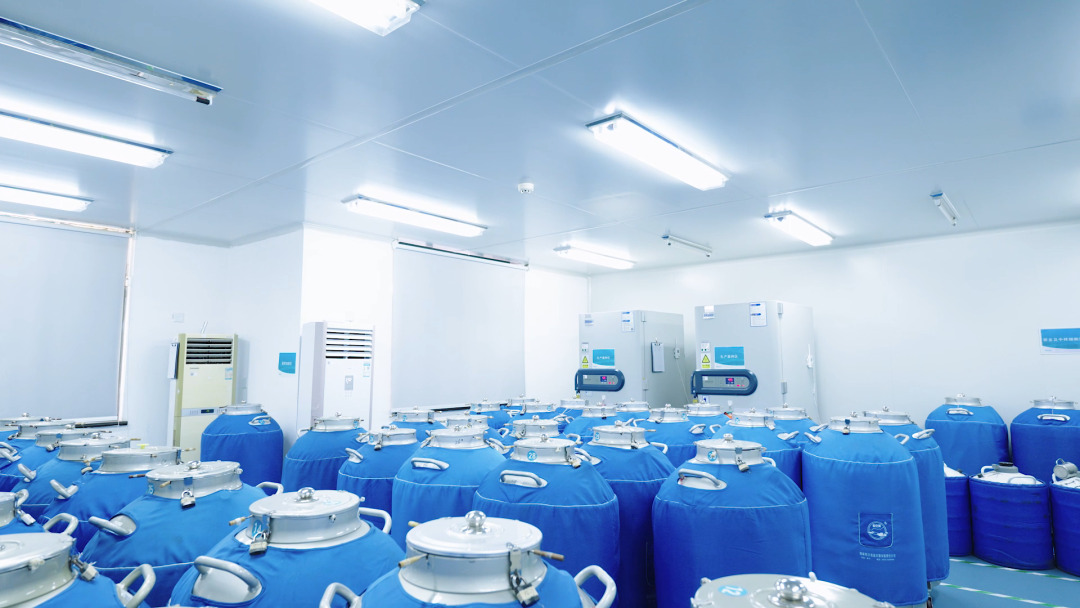
The successful construction of a dual antibody development system, comprising both immune libraries and natural libraries, laid the foundation for multi-dimensional antibody development. The immune library platform innovates animal immunization strategies, building antibody libraries with high specificity and sensitivity, which significantly improves the efficiency of discovering specific antibodies. The company has established domestically leading diagnostic natural antibody libraries with a total capacity exceeding 1013, a 1011 alpaca nanobody natural library, and a 1011 camel nanobody natural library. This breakthrough moves beyond the traditional immune-dependent model, substantially shortening the antibody development cycle and enhancing development efficiency.
Autobio focuses on research of enzymes for molecular diagnostic reagents, achieving core technology breakthroughs in enzyme mutation optimization and preparation, obtaining a high-activity Tth enzyme. By utilizing high-throughput screening, it has obtained aptamers that specifically inhibit Tth enzyme activity. This ultimately enabled the long-term storage of related reagents at 2°C-8°C. This breakthrough not only reduced production costs for the relevant reagents but also eliminated dependence on imported enzymes, providing the molecular diagnostics with high-performance, easy-to-store domestic core reagent options.
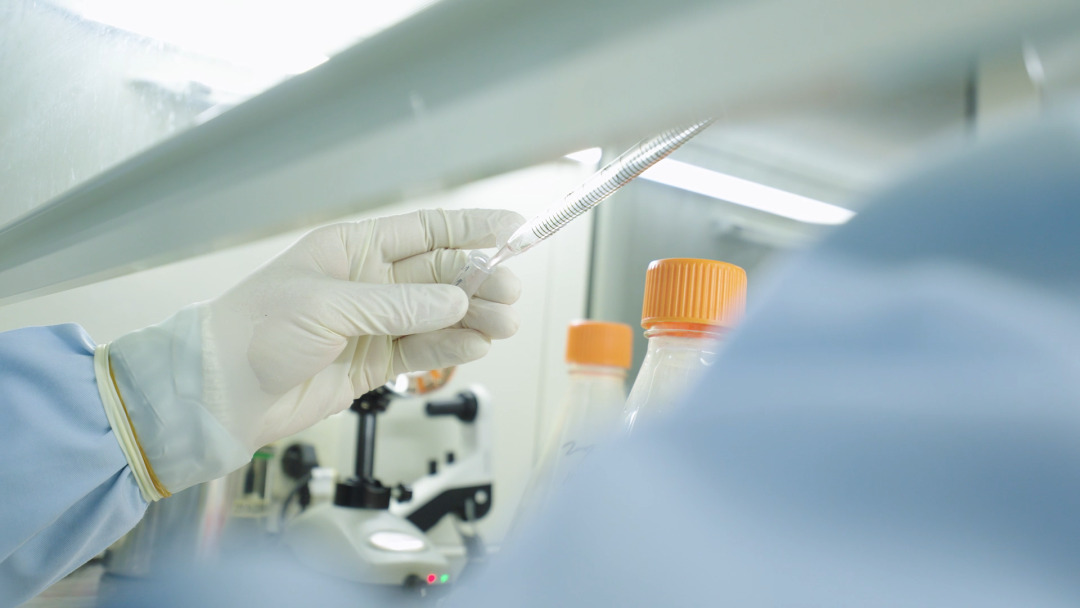
Regarding underlying tool enzymes for sequencing, the company designs \"small but precise\" enzyme mutant libraries. Coupled with high-throughput screening technology, this allows for the rapid, targeted development of enzymes with desired performance characteristics. A professional biochemical analysis platform has been established, breaking through technologies for purity, activity, endonuclease/exonuclease residues, nucleic acid residues, phosphatase residues, and molecular weight, and have completed the development of over 20 underlying tool enzymes for sequencing.
Centering on the foundational principles of high-throughput sequencing technology platforms, Autobio utilizes molecular modeling and multi-site structure-activity relationship analysis to directionally design fluorescently modified dNTP compounds characterized by high fluorescence intensity and low background noise. Integrated with complex, refined purification processes and a multi-indicator, full-process quality control system, a standardized synthesis process platform has been established. This platform systematically addresses core challenges such as purity control and fluorescence quantum yield enhancement, achieving a dual improvement in product signal intensity and storage stability.
In polymer synthesis, leveraging AI-assisted design methods and continuous optimization of reaction processes, the company has overcome a series of challenges associated with the synthesis, purification, and quantification of polymer macromolecules. Building on this foundation, through modification and three-dimensional structuring of chip carriers, it has achieved a data density increase of over 40% compared to benchmark platforms utilizing the same technology. All the aforementioned compound products have now entered full-scale mass production.
The company has overcome technical challenges in phosphorothioate modification and locked nucleic acid (LNA) modification. Through optimization of synthesis and purification processes, it has resolved issues such as desulfurization in phosphorothioate-modified sequences and low coupling efficiency in LNA synthesis, achieving an average coupling efficiency of 99%. Supported by automated synthesis platforms and a coupled mass spectrometry/chromatography quality control system, Autobio has cumulatively developed over a hundred modified nucleotide products, meeting the application demands of molecular diagnostics and high-throughput sequencing.
Autobio's technological breakthroughs and strategic layout have progressed in a stepwise manner. In 2021, the company initiated the construction of a functional microsphere technology platform and concurrently began R&D on immunomagnetic beads, formally embarking on core technology development for functional microspheres. In 2022, efforts expanded to include nucleic acid magnetic bead R&D, enriching the product line and completing the microsphere category matrix. By 2024, the development of nucleic acid magnetic beads was concluded. During the same period, core technology development for immunomagnetic beads was also finalized, achieving comprehensive mastery over core technologies for uniform microsphere particle size regulation, precise magnetic load control, and surface functionalization. This has resulted in a technological landscape where multiple categories of microspheres develop synergistically.
Only by gripping the "lifeline" can one seize the "opportunity" for development. Currently, in the supply of core raw materials such as antigens, antibodies, and enzymes, Autobio is far ahead. This has significantly enhanced the stability and accuracy of its diagnostic product system and elevated the company's core competitiveness. Looking to the future, regarding core raw materials for diagnostic reagents, Autobio will continue to focus on technological upgrades and application scenario expansion. Through full-chain technology iteration and industrial collaboration, it will further solidify the foundation of self-sufficiency and control over diagnostic core raw materials, helping the China's IVD industry advance into a new stage of higher-quality development.


Address: NO.87 Jingbei Yi Rd, National Eco&Tech Zone, Zhengzhou, China
Email: info@autobio-diagnostics.com Tel: +86-371-6200-7036
Autobio Copyright Reserved for ICP 18006568. All Rights Reserved.
 Select Market or Language


